

32
Juliet Strong
CMO at RoomPriceGenie

I've spent my career trying to humanise technology
Let’s start with the big picture. Who is Juliet Strong, and what gets you excited about leading marketing in the hotel-tech world?
I’m a marketer, a mum, and a travel fanatic. I live just outside London in the UK with my family and my 2 dogs. What gets me excited and energized are blank-page projects and getting new ideas off the ground. I’ve spent my career trying to humanise technology and make it very real and meaningful for real-world businesses, and hotel-tech is my favourite version of that — because the end customer is impossible to fool. Independent hoteliers are the hardest-working, most pragmatic buyers on the planet. They can tell marketing ‘fluff’ from a mile away!
But when you win their trust, you know you’ve properly earned it. And the best part? When the product works, and delivers real change and advantage for them, nobody says “great RevPAR uplift.” They say “I’ve got my mornings back” and “I can sleep better at night.” It’s a gift and a privilege to get to market peace of mind for a living.
You spent years inside tech giants like Microsoft , but you made the leap back to hospitality. What was the pull?
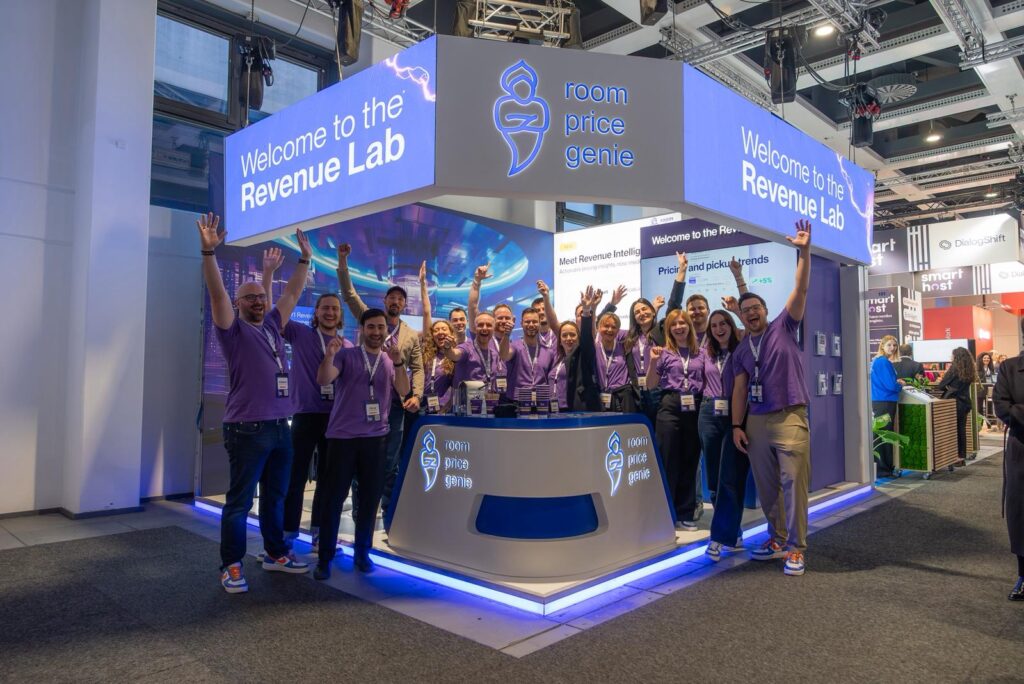
Confession: hospitality was my first love! My very first marketing job was at Forte Hotels, working across every brand in the portfolio while I studied for my marketing qualifications — it gave me an incredible introduction to all the different forms of marketing – as well as how hotels operate. We had an amazing staff perk: last-minute stays at ridiculous prices in hotels around the world. I’d hop on a plane and find myself at the Georges V in Paris or the Hotel Eden in Rome.
That’s where hospitality got under my skin — seeing both sides of the curtain. Behind the scenes you find beautiful complexity, everything running against the clock. Front of house, it’s seamless, curated, effortless-looking magic.
That gap between the craziness backstage and the calm out front is the whole industry in a nutshell, and I’ve been slightly obsessed ever since. Microsoft and other tech firms gave me invaluable experiences around how to approach scale and rigour — but this feels a lot like a homecoming.
Being in ‘builder’ mode forces you to be courageous and creative
Your resume is a ‘builder’s’ manifesto, always launching, always shaking things up. What is it about that process that drives you?
I’ll be honest: I don’t think in marketing and hospitality things are ever ‘finished’. We’re always building and evolving. If someone shows me a polished, humming machine, whilst I may admire it, I’m often looking for the thing that can be optimised or added.
What I love is the ‘messy middle’ — small energetic teams, big market, nothing fully decided yet. Being in ‘builder’ mode forces you to be courageous and creative: you use everything you have to decide on a route, launch it, and then find out quickly whether you were right. My current blank page is close to home and centered on how my team is evolving: we are turning ourselves into a genuinely AI-driven team.
Not AI as a ‘party trick’ or a ‘chat function’ – but AI baked into every step of how we operate, how we research, write, plan and localise across eight markets. Ask me again in a year what’s working and what is still in ‘build’ more! My confidence is high though.
You’ve had nine months to make your mark at RoomPriceGenie. What’s been your favorite or most ‘out-of-the-box’ marketing play so far?
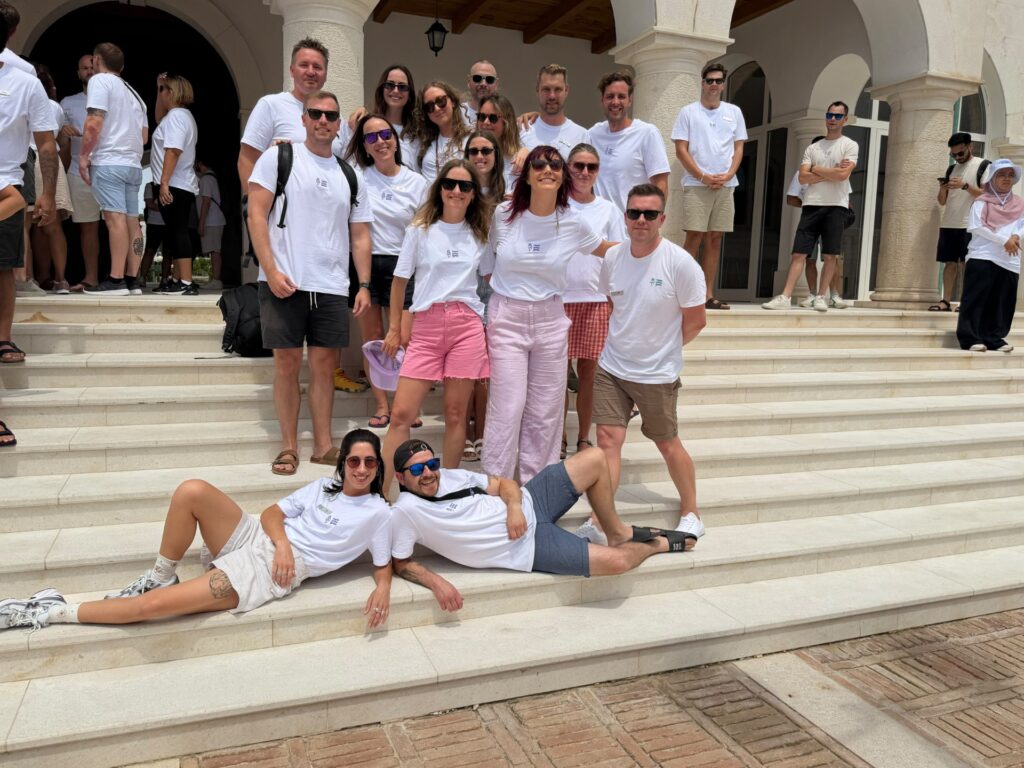
Undeniably, launching Revenue Intelligence at ITB in Berlin in March. We didn’t just take a booth, we launched a whole creative universe: a social teaser campaign, a lightning motif running through everything we created, live “experiments” on the hour, digital screens around the venue, a genie mascot (which was, I’m told, roughly the temperature of the sun inside — we owe those people a medal), numerous press interviews and podcasts, 15 partners actively part of the launch with us, and parties where so many of the attendees shared far and wide on social media. And that was just the launch moment; there was – and continues to be – a long tail of activity that turned the momentum into a strong new business stream.
The out-of-the-box bit wasn’t one stunt — it was executing a multi-channel product launch with a storyline, with the strength of 15 partners behind us, and a vision that was firmly rooted in solving one of the biggest daily pain points for hoteliers. One of my favourite moments: a partner loved our product tour format so much they built their own in a matter of hours and demoed it on their own stand.
That's the playbook: automate the admin, invest in building your community
You’re adamant that in hospitality tech, a great product isn’t enough. So, when everyone else is shouting about features, what are you shouting about instead? How does that “support system” mindset actually change your marketing strategy?
It’s all about creating moments of advantage and optimism. Here’s the problem with features: a feature list tells you what a product does, but it tells you absolutely nothing about how your world changes. It favours the vendor agenda not the audience needs. It doesn’t understand what keeps you up at night, what drains your time and energy, or what quietly leaves you feeling exposed — am I pricing this wrong? Is everyone else fuller than me? So while most vendors are talking “AI-powered pricing!”, we need to be focusing on what’s on the other side: the pressure that lifts, the mornings you get back, the confidence that the numbers are handled.
And that’s exactly where the “support system” mindset comes in — because we know the product on its own often isn’t enough. We see ourselves as the champion of the hotelier. That starts with the product itself — for decades, revenue management was a large hotel-chain luxury, but we built ours for the independent from day one, not adapted down but built for relevance and scale. But the reality is that the relationship doesn’t end at the moment the product is purchased. If anything, that’s when hoteliers need us most. So the support is properly human: people who genuinely understand the craft of revenue management, who are invested in the customer’s success, walking alongside our customers at every step.
And marketing’s job is the other half of that — enablement content that helps hoteliers build a real revenue management practice around the product, forums to exchange ideas with other hoteliers, not just switch on a tool and hope. Holistic support, basically: humans plus product plus know-how. And because hoteliers are rightfully skeptical of software promises, we know that in order to build trust we need to back feature promises with receipts — 19% average revenue uplift, ten hours a week returned, 4,000+ hotels in 65 countries. Optimism with evidence – that’s what our audiences need.
You have that perfect “outside-in” view on the industry. What’s the one killer marketing tactic from the tech playbook that you’re shocked more hoteliers aren’t using?
Can I have two, wrapped as one? The tactic is: automate to humanise.
In tech, the smartest teams treat AI as a colleague, not a gadget — it does the drudgery so humans can do the things humans are actually good at. Most hoteliers I meet are still at the “I asked ChatGPT for ideas” stage, which means the biggest time-unlock is sitting there unused. But here’s the twist: the point of the saved hours isn’t just efficiency. It’s time available for building community. Tech companies spend huge amounts of money trying to manufacture what hoteliers get for free — genuine superfans.
Guests who come back every year, write love letters disguised as reviews, and recruit their friends. While Notion has ‘ambassadors’; the hotelier has the couple who’ve booked the same room for their anniversary every June since 2019 – and many other superfans aside. So now is the time to let AI handle the repetitive, manual tasks and automate the workflows so hoteliers can spend the ten hours they get back each week on the regulars, the local partnerships, the guestbook-worthy moments.
That’s the playbook: automate the admin, invest in building your community.