
33
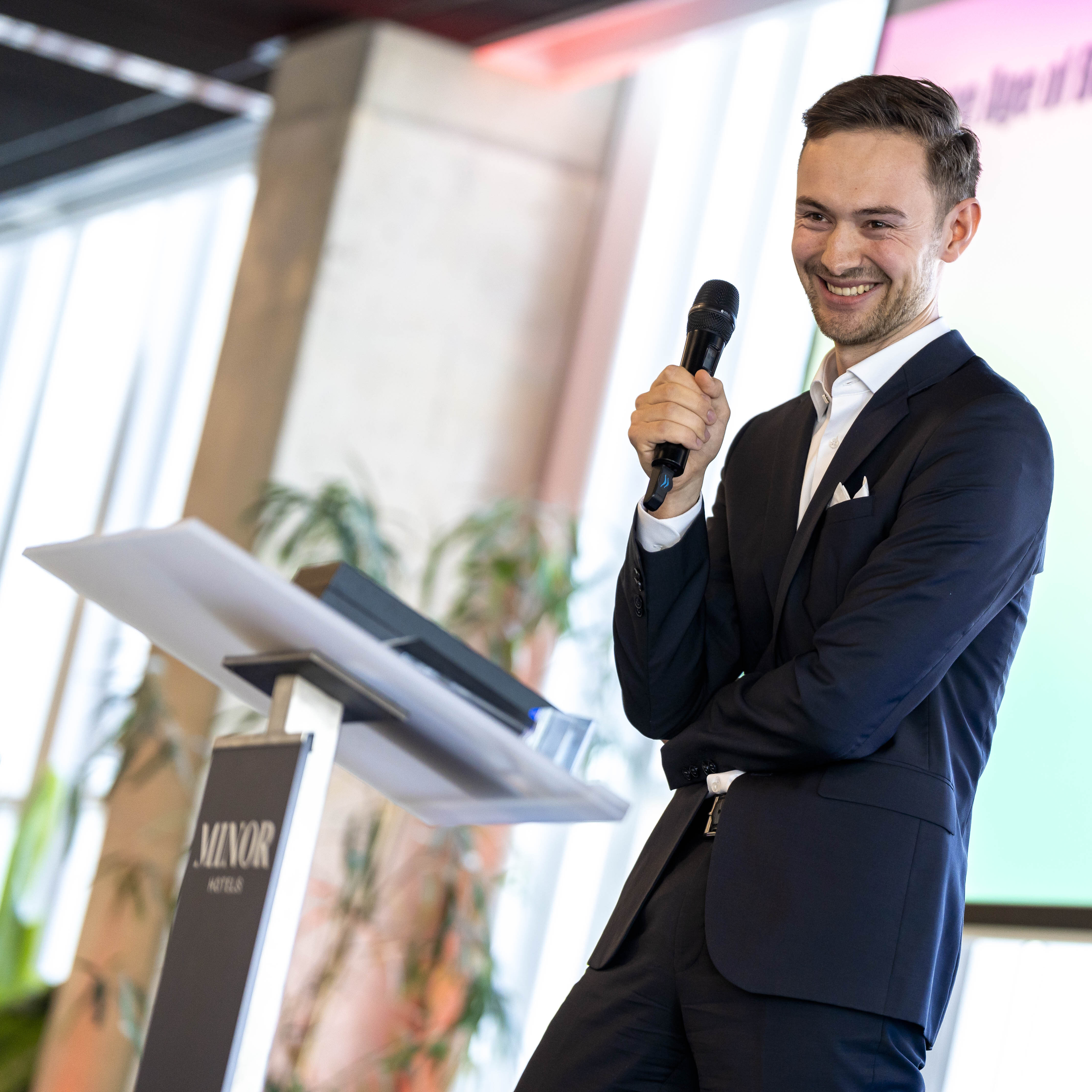
Tom Behn
Operations Project Manager at Minor Hotels Central Europe
Gamers are everyone.
Let’s start with the big picture. Who is Tom Behn, and what gets you excited about project management in hospitality, and what you are currently working on?
I’m Tom Behn, originally from Hamburg, and honestly I’ve been a hospitality junkie for as long as I can remember. I’ve worked in hospitality since I was 15 years old, so I sometimes joke that hotels have raised me more than school did. Today I’m 26 and work as Operations Project Manager for Minor Hotels, based in Berlin. My main responsibility is actually sustainability and ESG across Central Europe, but one of the things I love most about project management is that no week looks the same.
One day I’m discussing energy consumption and audit certifications, the next day I’m talking about gaming rooms, guest experience or future travel trends.
My Mondays are always exciting because I never really know what the week is going to throw at me. That variety is what keeps me motivated. It can be challenging sometimes, but I’d much rather have ten different projects than do the exact same thing every day.
What were the key barriers you had to remove so that casual gamers, business guests, families and streamers all feel that a gaming room is “for them” and not just for hardcore gamers?
That’s actually one of the biggest challenges we faced in the beginning. I think many people still have this old stereotype of what a gamer looks like. In Germany especially, many people remember that famous RTL documentary from 2011 that painted a very specific and honestly quite negative picture of gamers.
The reality today is completely different. Gamers are everyone. Students, business travelers, parents, consultants, CEOs. Trying to put all gamers into one category simply doesn’t work anymore.
That realization became one of the foundations of game:nxt by nhow.
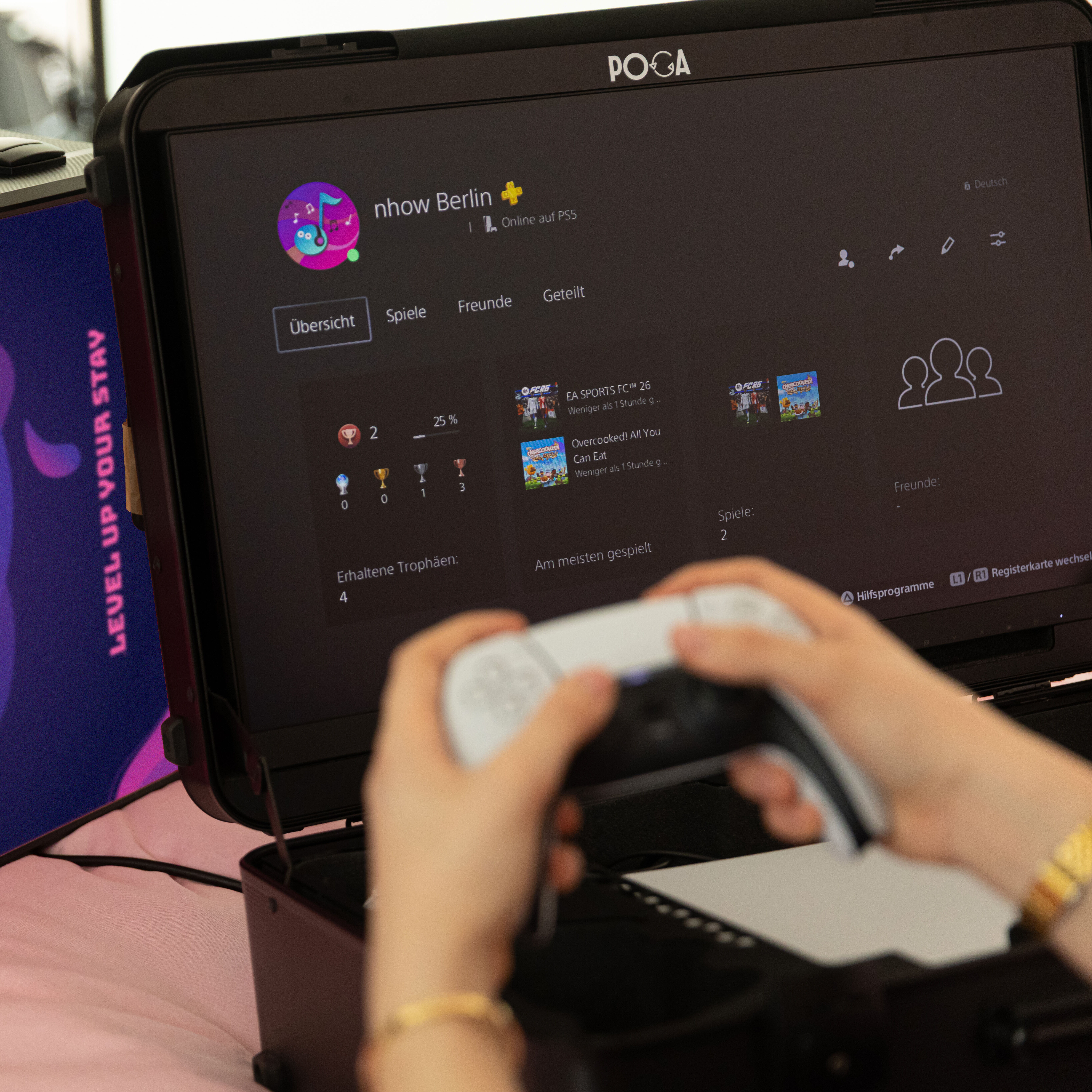
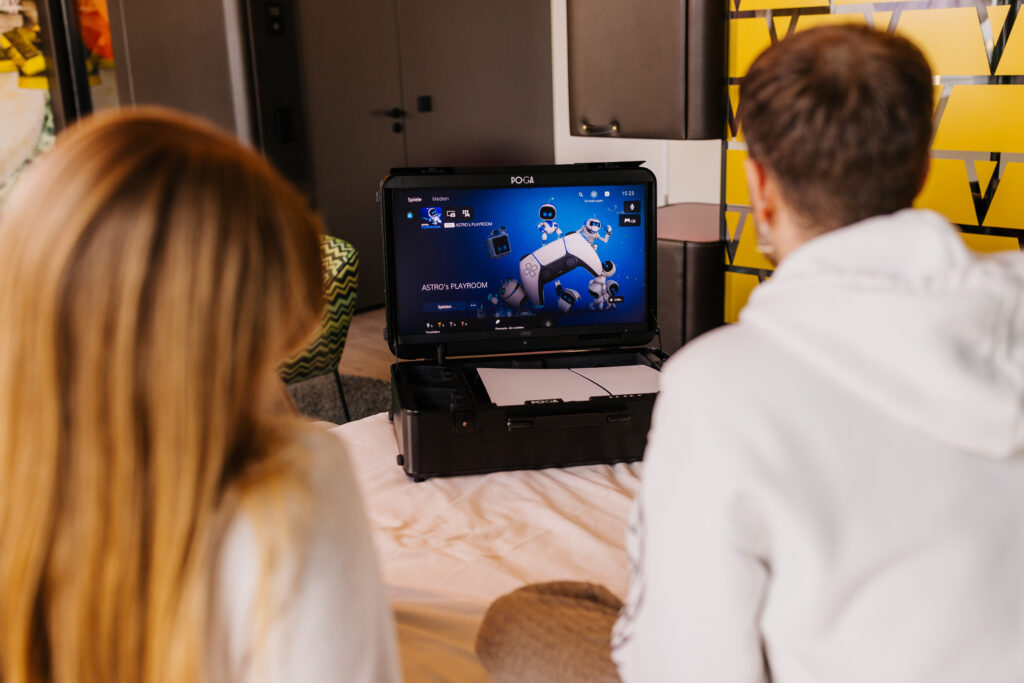
We wanted the concept to feel inclusive rather than exclusive. That’s why we built four different pillars into the concept. One of my favourites is actually our Gaming Suitcases. Guests can simply rent a suitcase containing a PlayStation 5 and everything they need. It’s plug-and-play and available in many of our nhow hotels. You don’t need to be a hardcore gamer. Maybe you’ve never even touched a console before. You can still try it and have fun.
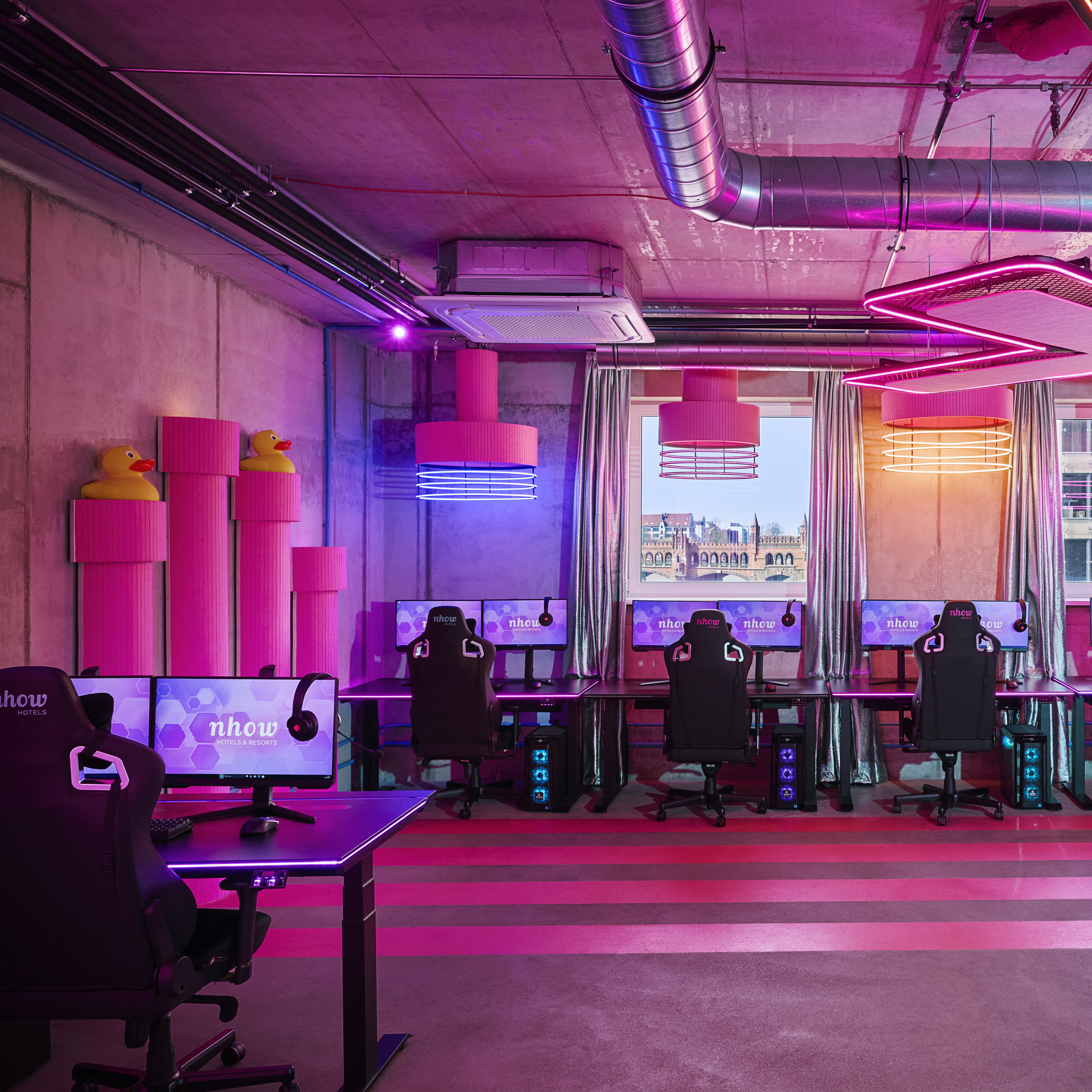
For our gaming rooms in nhow Berlin and nhow Frankfurt, we applied the same mindset. The technology is high-performance and professional, but the experience should feel simple, comfortable and welcoming. We deliberately didn’t want the rooms to feel like you’ve walked into an esports arena. We wanted them to feel like a great hotel room that just happens to contain some very impressive gaming equipment.
Streamers weren't part of our original target audience.
What are the specific needs of streamers and content creators that you had to design for, beyond just fast internet and a good chair?
Interestingly, streamers weren’t part of our original target audience. The idea actually came from conversations I had here in Berlin during an industry event. I spoke to several streamers and content creators and they all told me exactly the same thing.
They hated working from hotels.
Not because the hotels were bad, but because they never knew whether they could actually do their job there. They needed reliable internet, proper lighting, space for equipment and a quiet environment. That immediately got me thinking.
If we’re already building high-performance gaming rooms, why not evolve some of them into content creation spaces?
Imagine checking into a hotel room that already includes professional lighting, cameras, microphones, ultra-fast internet and a high-end PC capable of streaming, editing and content production. Suddenly the room becomes much more than a gaming room. It becomes a workspace for a completely new type of traveller. And if I may brag a little bit, the internet speed in some of these rooms is probably among the best many creators have ever experienced in a hotel.
You mentioned that many business guests book the gaming rooms for both work and play. What does this tell you about how the “new traveler” is blending business, leisure and gaming in one trip?
Honestly, in the beginning we were a little surprised. But the more we looked at the data, the more it made sense.
Over half of Europeans between the ages of 6 and 64 play video games in some form. That’s essentially one in every two people. So when somebody says, ‘I don’t think business travellers are gamers,’ my response is always: statistically, a lot of them probably are.
What we’re seeing is closely linked to the rise of bleisure travel, where people combine business and leisure during the same trip. Imagine you’ve spent an entire day sitting in meetings, answering emails and talking numbers. You return to your hotel room at 8pm and have two options. You watch TV or you jump online and play a few games with friends back home. For many people today, gaming is simply another way to relax.
In the end, we’re not really selling gaming. We’re offering guests another way to feel at home while they’re away from home.
The most valuable feedback often comes from people who know the industry better than I do.
What signals (beyond occupancy) do you use to understand whether this concept really resonates with this new generation of guests?
I think one mistake in hospitality is assuming everything can be measured through occupancy and ADR.
Of course, those KPIs are important. But when you’re building something completely new, you also have to listen to the softer signals. We’ve recently started collecting direct guest feedback through surveys and reviews to better understand how people experience the concept. Personally, I’m also quite active within the industry. I attend a lot of hospitality events, gaming events, fairs and conferences. Some people might call it networking, my friends would probably call it not being able to stay at home for very long. The most valuable feedback often comes from people who know the industry better than I do and ask the difficult questions.
Internally, the feedback has also been very interesting. To be completely honest, not everyone was convinced in the beginning. A gaming strategy in hospitality sounds unusual at first. But after many discussions and with strong support from Alexander Dürr, our SVP Operations Central Europe, more and more colleagues started seeing what we’re seeing: a growing traveller segment that hospitality hasn’t really focused on yet.
For me, that’s one of the strongest indicators that we’re heading in the right direction.
How do you use partnerships like SK Gaming to reach people who would never naturally consider a design hotel as “their” place?
SK Gaming, one of the oldest esport organizations has been a key partner from the very beginning of this journey and we’re incredibly proud to be an official partner of such an iconic brand.
Of course, one major advantage is visibility. SK gives us access to an audience that may never have considered booking a nhow hotel before. But for me, the greater value goes beyond marketing.
They’ve helped us understand what actually matters in the professional gaming space. Whether it’s infrastructure, room setup, connectivity requirements or player expectations, they provided expertise that we simply couldn’t have developed on our own as a hotel company.
One great example is the Gaming Studio, the third pillar of our concept, which we developed at nhow Berlin. SK helped us understand what professional players, teams and content creators actually need when they travel. Together, we were able to create a blueprint that combines hospitality, gaming and content creation in a way that genuinely works for the industry.
When we built the studio, we didn’t want to create a room full of flashy gaming equipment. We wanted to create a space that could support bootcamps, streaming, content production, interviews, team meetings and professional gaming sessions. SK’s experience was incredibly valuable in helping us get that right.
At the same time, the partnership creates a bridge between two worlds that traditionally haven’t interacted very much: hospitality and esports. And that’s what excites me most.
We’re not simply bringing gaming into hotels.
We’re creating spaces where the next generation of travellers, creators, gamers and communities can meet, work, compete and stay, all within design-driven environments that represent something truly first of its kind in European hospitality.